Method
The science is the technology. The art is getting your team to adopt it.
Our process is called NeSBA: we first understand your needs, then propose what AI can do and what happens if it isn't implemented.
The science is the technology. The art is getting your team to adopt it.
01
We understand how you work
Processes, procedures and people before proposing technology. A socio-cognitive view of your operation.
02
We design it to fit
A solution for your hotel, not a generic package: AI, data and automation where they truly move revenue or save time.
03
We leave it in your hands
We support adoption until your team understands it and turns it into the hotel's own knowledge.
Our process
NeSBA: from need to a solution with measurable impact
Four steps to make AI really work in your operation.
N
Needs
First we assess the real needs and problems of your operation.
S
Solutions
We outline what AI can do: an agent, an artifact or an automation.
B
Benefits
We measure the impact: time saved, fewer errors and real-time information.
A
Alternatives
We show what happens if you don't implement: the cost of staying as you are.
Our model
Digital transformation model
Developed by Xavier Cárdenas. It links technology frameworks with the phases of sensemaking: digital transformation as a continuous process, not a one-off project.
Three lenses to read the organization
PHASE 1
Ecological change
Detect the disruption
Changes in consumer behavior and expectations, the competitive landscape, crises and data availability.
PHASE 2
Enactment
Make sense and respond
The digital business and digital transformation strategy is defined, shaped by structure, culture, leadership and teams.
PHASE 3
Selection and action
Choose and execute
Value creation changes: customer experience, operating processes and business model.
PHASE 4
Retention
Consolidate or correct
Impact, positive or negative, is measured, and what is learned feeds back into strategy and the use of technology.
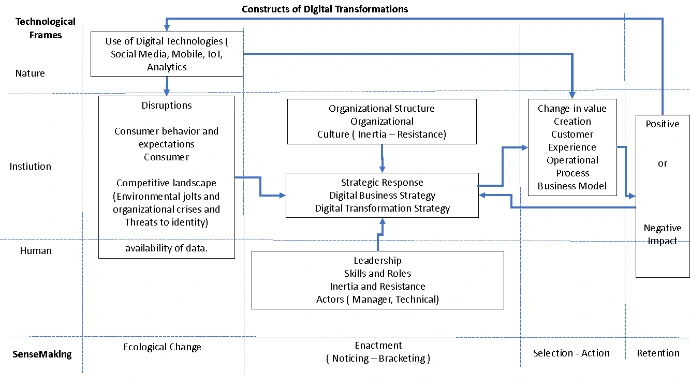
Figure: theoretical model of digital transformation (technology frameworks and sensemaking phases). Author: Xavier Cárdenas.
It's a cycle: what is retained returns to strategy and technology, and the process repeats. Grounded in research presented at AMCIS with José Esteves.
Tell us how your team works.
Book a conversationMethod
The science is the technology. The art is getting your team to adopt it.
Our process is called NeSBA: we first understand your needs, then propose what AI can do and what happens if it isn't implemented.
The science is the technology. The art is getting your team to adopt it.
01
We understand how you work
Processes, procedures and people before proposing technology. A socio-cognitive view of your operation.
02
We design it to fit
A solution for your hotel, not a generic package: AI, data and automation where they truly move revenue or save time.
03
We leave it in your hands
We support adoption until your team understands it and turns it into the hotel's own knowledge.
Our process
NeSBA: from need to a solution with measurable impact
Four steps to make AI really work in your operation.
N
Needs
First we assess the real needs and problems of your operation.
S
Solutions
We outline what AI can do: an agent, an artifact or an automation.
B
Benefits
We measure the impact: time saved, fewer errors and real-time information.
A
Alternatives
We show what happens if you don't implement: the cost of staying as you are.
Our model
Digital transformation model
Developed by Xavier Cárdenas. It links technology frameworks with the phases of sensemaking: digital transformation as a continuous process, not a one-off project.
Three lenses to read the organization
PHASE 1
Ecological change
Detect the disruption
Changes in consumer behavior and expectations, the competitive landscape, crises and data availability.
PHASE 2
Enactment
Make sense and respond
The digital business and digital transformation strategy is defined, shaped by structure, culture, leadership and teams.
PHASE 3
Selection and action
Choose and execute
Value creation changes: customer experience, operating processes and business model.
PHASE 4
Retention
Consolidate or correct
Impact, positive or negative, is measured, and what is learned feeds back into strategy and the use of technology.
Figure: theoretical model of digital transformation (technology frameworks and sensemaking phases). Author: Xavier Cárdenas.
It's a cycle: what is retained returns to strategy and technology, and the process repeats. Grounded in research presented at AMCIS with José Esteves.